






AutoGPT
The wildly popular experimental open-source project that achieves complete autonomy in GPT-4 has over 100,000 stars on GitHub.
标签:AI Training ModelAI training modelWhat is AutoGPT?
AutoGPT is an experimental open-source application showcasing the true potential of the GPT-4 language model, boasting over 100,000 stars on GitHub. Powered by GPT-4 , this program links together the concepts of large LLM language models , autonomously achieving any set goal. AutoGPT helps users create, deploy, and manage AI agents capable of automating complex workflows. It provides an intuitive low-code interface, allowing users to design and configure their own AI agents through the “Agent Builder” or choose from a library of preset agents. AutoGPT supports multiple operating systems, including Linux, macOS, and Windows, and requires certain hardware and software configurations. With workflow management, deployment control, monitoring, and analytics capabilities, AutoGPT helps users efficiently automate tasks.
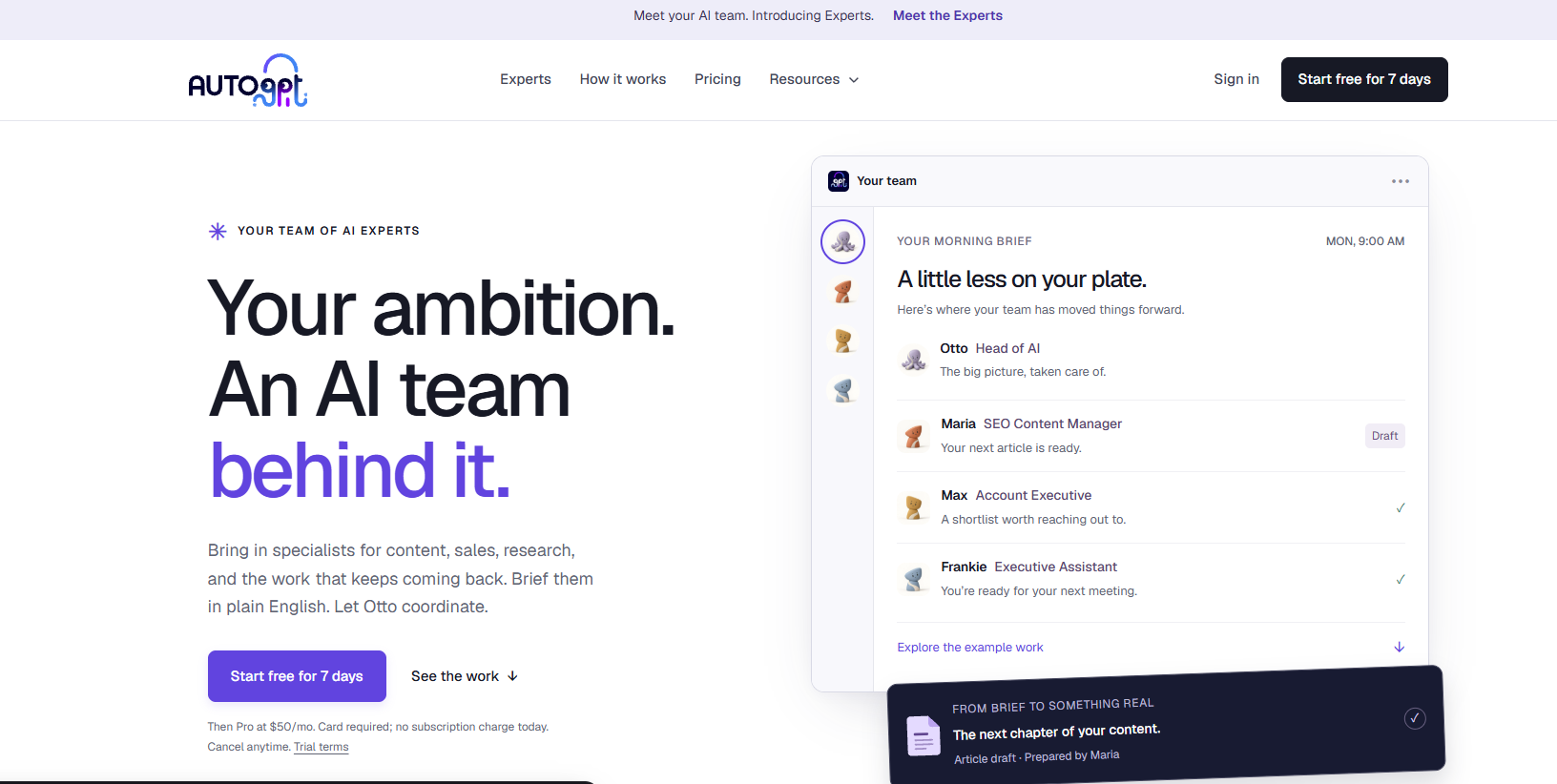
Main functions of AutoGPT
- Create and deploy AI agents : Users can quickly design and configure AI agents with a low-code interface to automate tasks.
- Automating complex workflows : AI Agents can perform tasks such as market research, content generation, and data analysis, improving work efficiency.
- Low-code development environment : Provides an intuitive interface that allows users to build and optimize automated processes without deep programming knowledge.
- Workflow Management : Users can easily build, modify, and optimize automated workflows, and accomplish complex tasks by connecting different functional modules.
- Deployment control : Supports full lifecycle management from testing to production, ensuring stable operation of the Agent.
- Real-time monitoring and analysis : Users can track agent performance, gain data insights, and continuously optimize automated processes.
How to use AutoGPT
- Choose a hosting method :
- Self-hosted : Suitable for users with some technical background, and requires meeting certain hardware and software requirements.
- Cloud hosting : Suitable for users who want to get started quickly. It is currently in the testing phase and requires users to be added to the waiting list.
- System preparation :
- Hardware requirements :
- CPU : 4 cores or more recommended.
- Memory : Minimum 8GB, recommended 16GB.
- Storage : At least 10GB of free space.
- Software requirements :
- Operating systems : Linux (Ubuntu 20.04 or later recommended), macOS (10.15 or later), Windows 10/11 (WSL2 required).
- Required software : Docker Engine (20.10.0 or later), Docker Compose (2.0.0 or later), Git (2.30 or later), Node.js (16.x or later), npm (8.x or later), VSCode (1.60 or later) or any modern code editor.
- Hardware requirements :
- Installation and configuration :
- Cloning repository :
-
- Install dependencies :
-
- Start the service :
- Using the front-end interface : Access http://localhost:3000 (default port) through a browser.
- Create Agent :
- Use Agent Builder : Design and configure your own AI Agent through a low-code interface.
- Use pre-configured agents : Select and use ready-made agents directly from the library.
- Management tasks :
- Workflow management : Connect different functional modules to build automated workflows.
- Deployment control : Manage the lifecycle of the agent from testing to production.
- Real-time monitoring : Track agent performance and gain data insights.
AutoGPT Application Scenarios
- Content creation : Quickly generate copy, scripts, news reports, and other content based on user needs, significantly improving creation efficiency.
- Business Automation : AI automatically tracks sales leads, generates market analysis reports, optimizes business processes, and improves work efficiency.
- Educational support : Generate personalized learning plans for students, assist teachers in designing courses and grading assignments, and improve teaching effectiveness.
- Data analytics : Automatically collects data, generates visualizations and analytical reports, providing strong support for decision-making.
- Social Media Management : Automated content posting, interaction response, and trend analysis to help you operate your social media accounts efficiently.
相关导航


