






AI Prompts
Stable Diffusion Prompt Book
What is the Stable Diffusion Prompt Book?
The Stable Diffusion Prompt Book is a free, open-source guide to prompts from the OpenArt platform, helping users optimize text prompts for Stable Diffusion models. Co-authored by several industry experts, it covers prompt construction techniques from basic to advanced levels. The book provides detailed prompt format examples and demonstrates the impact of linguistic details on image generation through comparative analysis. It also includes a rich stylized modifier dictionary to help users quickly expand their creative ideas.
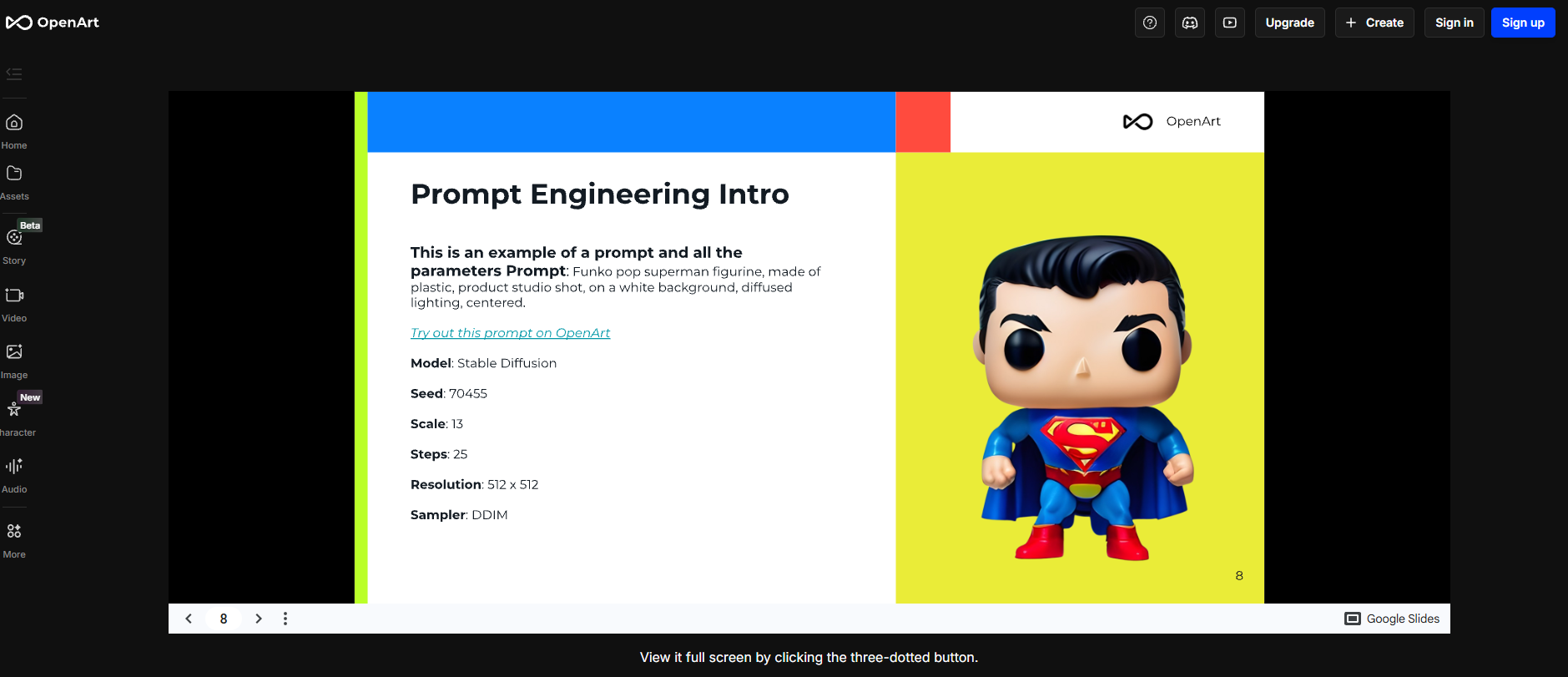
Main functions of Stable Diffusion Prompt Book
- Tip Construction Guide : Provides detailed tips format and syntax guidelines to help users build clear and effective text tips. It guides users step-by-step through considering elements such as photo type, theme, and details, helping them construct complete tips.
- Stylized modifiers library : Includes a large number of “magic words” and stylized modifiers, such as “cyberpunk” and “ink painting style”, to help users expand their creative boundaries and generate more stylized images.
- Case study comparison : By comparing the generation effects of different prompts on the same topic, the impact of language details on image generation is intuitively demonstrated, helping users understand how to adjust prompt words to optimize results.
- Parameter setting suggestions : Provides parameter setting suggestions related to the Stable Diffusion model to help users better control the image generation process.
- Advanced Tips : In addition to the basic prompt word construction methods, advanced tips are also provided to help experienced creators further improve the quality and detail of generated images.
- Cross-platform compatibility : Adapted to various versions of Stable Diffusion and mainstream WebUIs, allowing users to apply the tips and tricks in the manual across different tools.
How to use the Stable Diffusion Prompt Book
- Download the manual : Visit the OpenArt website and download the PDF version of “Stable Diffusion Prompt Book”.
- Learn basic prompting formats : Read the “Prompt Formatting” section in the manual to understand basic grammar and structure. For example, learn how to use the weighting symbols “()” and “” to adjust the importance of words.
- Constructing prompts : Following the guided questions in the manual, gradually construct prompts. For example, clarify the photo type, theme, details, lighting, environment, and color scheme. Refer to the “Descriptive Terms” section of the manual and choose suitable style keywords, such as “cyberpunk” or “ink wash style.”
- Adjust generation parameters : Enter a prompt in the Stable Diffusion tool and set key parameters according to the manual’s recommendations, such as resolution (512×512 is recommended for beginners), number of sampling steps (CFG scale), and seed value. For example, a CFG value between 7 and 10 usually balances creativity and accuracy.
- Generate and Optimize : Click the Generate button to view the generated image. If the result is unsatisfactory, adjust it according to the advanced techniques in the manual. For example, use negative prompts to exclude unwanted content, or adjust the seed value to change the image details.
- Practice and Exploration : Through comparative analysis of case studies in the manual, gain a direct understanding of the impact of language details on image generation. Experiment with modifying prompts or parameters to explore different styles and effects.
Who is the Stable Diffusion Prompt Book for?
-
For beginners : If you’re new to Stable Diffusion or other AI image generation tools, this book can help you quickly learn how to construct effective prompts. It provides detailed guidance from basic grammar to concrete examples, enabling you to get started quickly and generate your first image.
-
AI learners : If you are interested in AI technology, this can help you better understand how the Stable Diffusion model works and how to interact with the model through text prompts.
-
For developers : This tool provides a wealth of prompt examples and parameter setting suggestions for technical personnel developing related applications or tools, which can help you better optimize the user experience of the tool.
-
Teachers : It can be used as a teaching resource to help students quickly master the basic methods of AI image generation and stimulate their creativity and imagination.
-
For students interested in AI technology, this book can teach them how to use AI tools for creative work.
相关导航


ai-navhub:The official website of the AI Toolset includes hundreds of AI tools from both domestic and international sources, as well as commonly used websites, frameworks, and models for AI learning and development, helping you join the wave of artificial intelligence and complete tasks efficiently and automatically!