

Tripo AI
AI 3D model generation platform: convert text and images into 3D models with one click.
标签:3D Model Generation AI Image ToolsAI 3D model generationWhat is Tripo AI?
Tripo AI is an AI 3D model creation platform that allows users to generate 3D models from text and images with a single click. Tripo AI integrates with Flux and GPT-4o image generators, enabling the rapid generation of high-precision 3D models from text, images, or doodles. It supports all major formats including GLB, FBX, and OBJ, and can be exported to engines such as Blender, Unity, and Unreal Engine with a single click, making it suitable for games, 3D printing, and metaverse applications. Tripo AI boasts powerful features such as intelligent segmentation, automatic skeleton rigging, and texture generation. The latest version, 3.0, has 20 billion parameters, further improving model accuracy and generation efficiency, and lowering the barrier to entry for 3D creation.
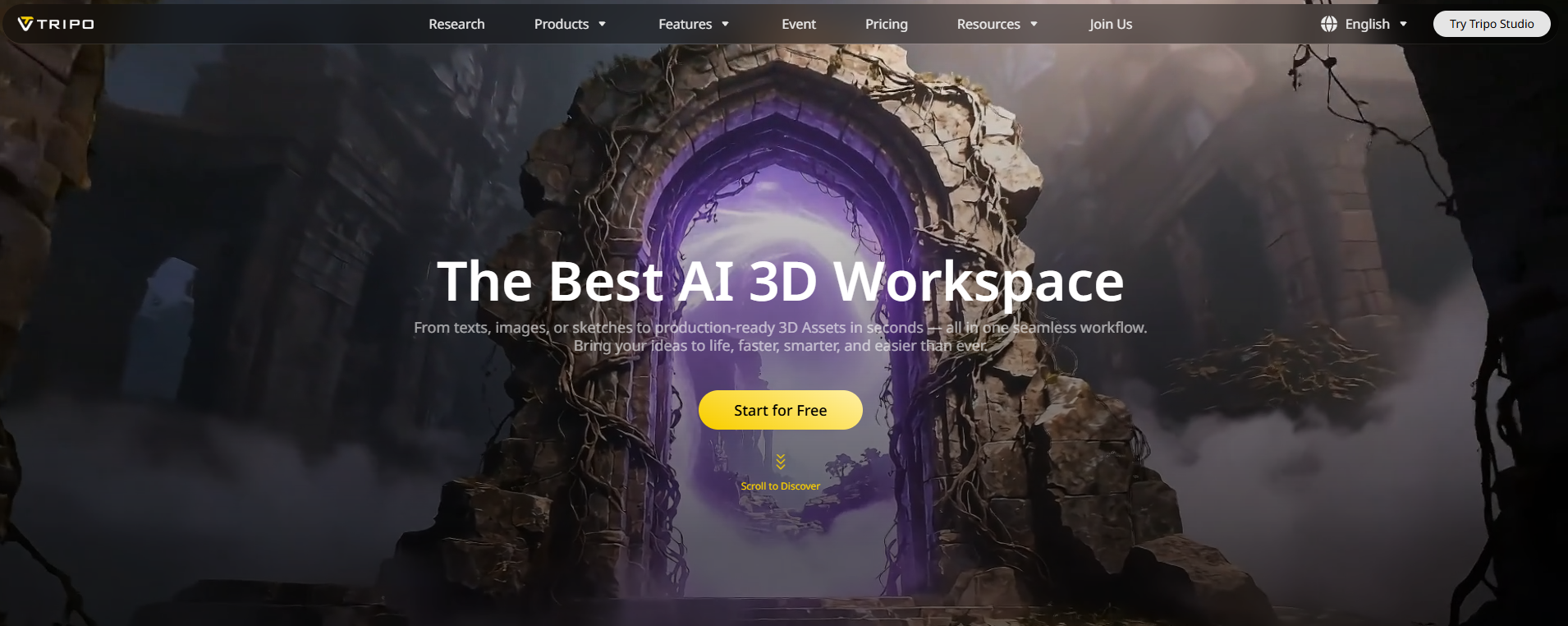
Tripo AI’s main functions
- Rapid 3D Model Generation : Generate high-quality 3D models in 10 seconds using text, a single image, multiple images, or doodles.
- Dual output modes : Provides standard mode and super mode. Users can choose the appropriate mode to generate 3D models according to their specific needs.
- Multi-format support : The generated models support multiple formats (such as glb, fbx, obj, usd, stl, etc.), suitable for multiple fields such as games, 3D printing, metaverse, product design, etc.
- High-precision geometry and textures : Tripo version 3.0 offers sharper geometry, cleaner topology, and richer textures, supporting ultra-high-definition details.
- Intelligent segmentation and editing : Automatically segments complex 3D models into meaningful parts, facilitating fine editing and adjustment.
- Automatic skeleton rigging : Generates a T-Pose model for the character and automatically rigs the skeleton, making animation production easier.
- Texture Generation and Repair : Easily generate and repair textures using the Magic Brush feature.
- Low-poly optimization : Intelligently generates low-poly models suitable for games and real-time rendering.
- AI-driven creation : integrated with Flux and GPT-4o, supporting the generation of everything from text to images to 3D models.
- Community and Sharing : Provides themed galleries where creators can share their work and interact with users worldwide.
How to use Tripo AI
- Visit the official website : Visit the Tripo AI official website https://www.tripo3d.ai/ and complete account registration and login.
- Generate 3D models :
- Choose a generation mode : Select the creation mode according to your needs. Standard mode is suitable for scenarios that require optimized topology. Super mode is suitable for scenarios that require extreme geometric clarity and detail.
- Input content :
- Text description : Enter a detailed text description, such as “a futuristic sci-fi spaceship”.
- Image input : Upload one or more images for reference.
- Doodles : Generate models using simple doodles.
- Generate Model : Click the “Generate” button, and Tripo will generate a 3D model within 10 seconds.
- Editing and optimization : Improve the generated model using the optimizations provided by the platform until you are satisfied.
- Choose a format : Select the appropriate file format (such as glb, fbx, obj, etc.) to export the model according to your needs.
- Applications to projects : Import the exported models into 3D software or game engines, such as Unity and Unreal Engine.
- Engage in events : Participate in monthly creative events on Tripo GameHub to win prizes and industry support.
Application Scenarios of Tripo AI
- Game Development : Developers can quickly generate futuristic weapon and alien creature models, significantly shortening the production cycle of game assets.
- 3D printing : Designers can quickly generate 3D models of lamps and export them as STL format, which can be used directly in 3D printers to easily realize personalized designs.
- Metaverse : In the metaverse that constructs virtual social platforms, users generate their own virtual avatars and personalized virtual space decorations, enhancing the immersive and personalized experience of virtual social interaction.
- Product Design : Designers quickly generate 3D models of sofas, show them to clients, obtain feedback in advance, optimize the design, and accelerate product launch time.
- Education : In university architecture courses, teachers have students quickly generate simple architectural models to help them understand basic concepts of space and structure.
相关导航