

Glif
No-code AI gadget building platform
标签:AI Office Tools Efficiency ImprovementAI efficiency improvementWhat is Glif?
Glif is a no-code AI gadget building platform that allows users to create and run small AI generators, known as “glifs,” by inputting text, images, or simple clicks. The platform’s core advantage lies in its ease of use; even users without a programming background can quickly get started and easily build and test AI models (such as AI meme generation). Glif provides a user-friendly environment for non-technical users to explore and implement AI applications, lowering the technical barrier and expanding the reach and application of AI technology.
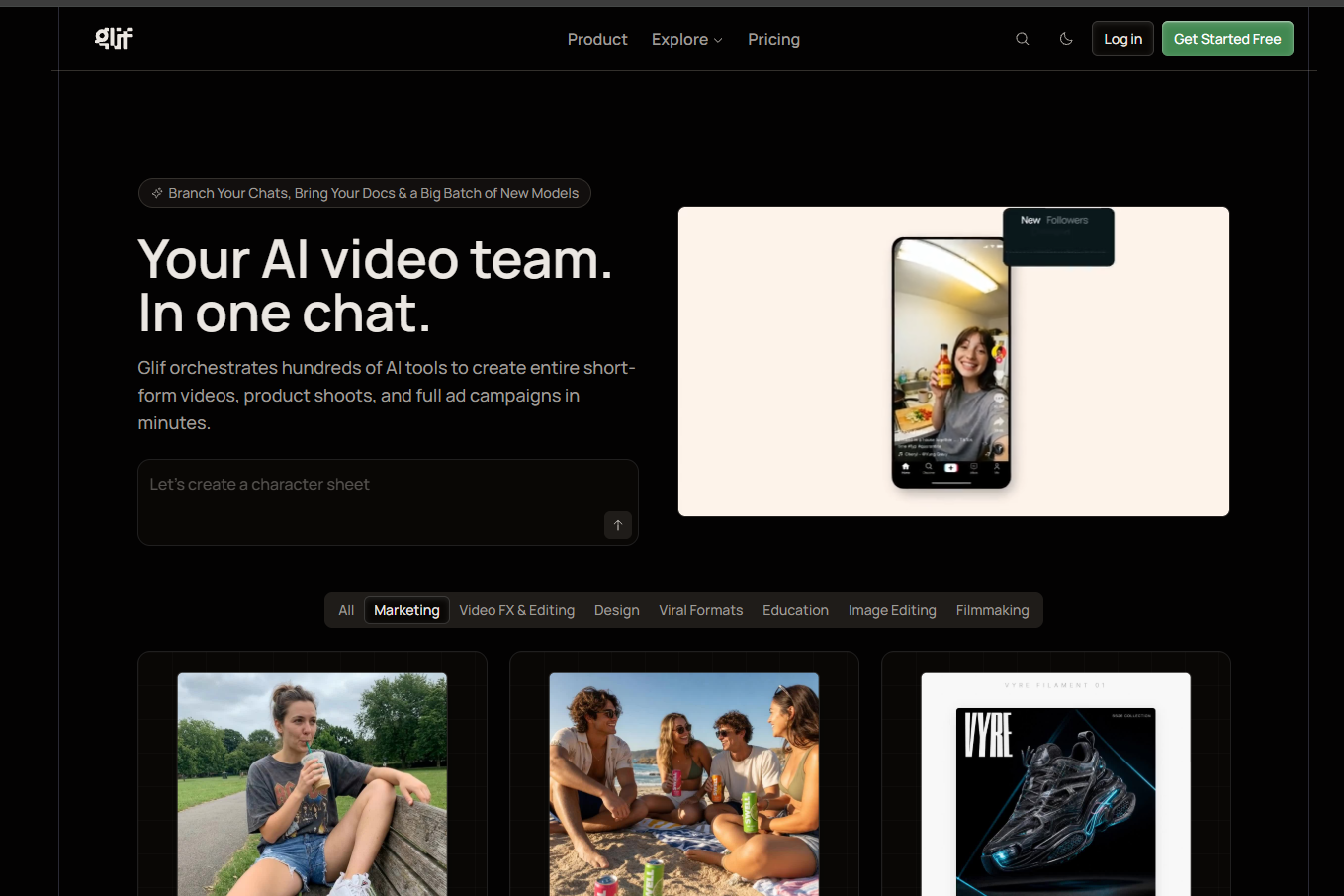
Glif’s features
- User-friendly interface : Glif provides an intuitive drag-and-drop interface that allows users to easily build AI processes without requiring professional programming knowledge.
- Diverse input support : The platform supports multiple input methods, including text, images, and click operations, to adapt to different AI application scenarios.
- Custom AI Generators : Users can create custom “glifs”, which are miniature AI generators that can generate outputs based on user-defined rules.
- Rapid prototyping : Glif supports rapid prototyping, allowing users to quickly build AI models and then test and optimize them.
- Model iteration and testing : Users can continuously iterate and test their AI generators to improve the accuracy and efficiency of their models.
- Community and sharing : Glif has an active community where users can share their “glifs”, get feedback, and collaborate with other users.
How to use Glif
- Registration and Login : Visit Glif’s official website ( glif.app ) and click “Sign In” to register/log in.
- Start building : Click “Build” in the top navigation bar of the website to begin creating your Glif.
- Naming and Description : Give Glif a unique title and description. Using a hash symbol (#) in the description will convert it into a link to the page with the corresponding tag.
- Adding a Block : Click the large “+” sign in Glif Builder to add your first building block. Building blocks can be user inputs, hints, tools, or styles, and they work together to affect the final Glif output. The builder offers different types of building blocks to choose from, including user inputs (pageInputs), generators (pageGenerators), tools (pageTools), styles (pageStyling), and advanced/experimental features (pageAdvanced/Experimental).
- Testing and Iteration : Use the test area on the right side of the builder to test your Glif. Enter values in the input fields (if applicable), and then click “Glif it!” to see the results. Adjust and optimize based on the results.
- Add more blocks : If you need more features or effects, you can continue to click the “+” symbol to add new building blocks.
- Publish your Glif : If you are satisfied with the output of your Glif, click the “Publish” button at the top of the page to publish your work. All Glifs are public by default and will be visible in your profile.
Glif product prices
Glif is currently free to use, but there is a limit to the number of times a user can run it. Currently, each user can run it 200 times for free per day. More paid plans may be introduced in the future.
相关导航